
US-China trade war Vietnam dynamics are reshaping global supply chains and manufacturing strategies across Asia. Vietnam is emerging as one of the biggest beneficiaries of the China+1 supply chain shift, but rising opportunities also come with increasing compliance risks.
Executive Summary
US-China Trade War Vietnam Overview
The US-China trade war Vietnam dynamic has made Vietnam one of the most important China+1 manufacturing bases in Asia. While higher tariffs and strategic-sector restrictions on China-origin goods create massive export and logistics opportunities for Vietnam, they also invite unprecedented customs scrutiny. To capitalize on this shift, Vietnamese exporters must position the country as a real production and compliance platform, rather than a tariff-avoidance gateway. Moving forward, mitigating the risks of “origin fraud Vietnam” and ensuring comprehensive documentation consistency will be the defining factors for sustainable market access.
| Market signal | What it means for Vietnam | Risk level |
| Section 301 tariffs remain a core US tool against China-origin goods | Vietnam remains attractive for China+1 production, but only where origin is genuinely Vietnamese or legally transformed. | High compliance impact |
| Vietnam exports to the US have grown rapidly | Vietnam gains production and logistics volume, but a larger US trade surplus increases political scrutiny. | High |
| FDI and manufacturing employment continue to expand | Factory relocation is not only a tariff story; Vietnam is becoming a production base for electronics, garments, furniture and industrial goods. | Medium |
| US and Vietnamese authorities focus on transshipment and origin fraud | Exporters must prove production, not simply ship from Vietnam. | High |
| Forced labor and supply chain traceability are emerging tariff risks | Exporters need supplier due diligence, not only freight and customs documents. | Medium-high |
These market signals show how the US-China trade war Vietnam environment continues to reshape regional supply chains.
Why the US-China Trade War Vietnam Situation Matters
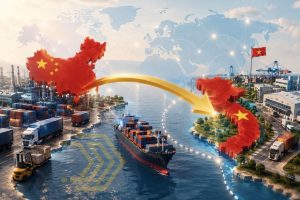
The US-China trade war is no longer only a bilateral tariff dispute. It has become a supply chain restructuring force. Since the first Section 301 tariffs were imposed on China-origin goods in 2018, global manufacturers have been under pressure to reduce direct exposure to China for products sold into the United States. The 2024 four-year review of Section 301 measures reinforced this direction by increasing tariffs on selected strategic sectors such as electric vehicles, solar cells, semiconductors, batteries, critical minerals, steel, aluminum and medical products.
For Vietnam, this creates both opportunity and exposure. On the opportunity side, Vietnam is one of the most credible China+1 locations because it offers competitive labor, an established export manufacturing base, deep integration with Asian supply chains, seaports serving both Transpacific and intra-Asia routes, and a dense network of foreign investors. On the exposure side, Vietnam is closely connected to China through intermediate inputs, machinery, components, fabrics, electronics parts and packaging materials. This makes origin compliance more complex.
A factory in Vietnam can be a legitimate new production base. But a warehouse, relabelling operation or light assembly line designed only to change paperwork is not a safe route to US market access. The difference between genuine manufacturing and circumvention is now one of the most important compliance questions for Vietnam exporters.
Factory Relocation from China to Vietnam: What Is Really Happening?
One of the biggest consequences of the US-China trade war Vietnam trend is accelerating factory relocation. Factory relocation to Vietnam is driven by more than tariffs. Companies are also responding to higher labor costs in China, geopolitical risk, supply chain resilience policies, customer requests for dual sourcing, and the need to reduce concentration risk. Vietnam has benefited because it can support both export-oriented manufacturing and regional supply chain integration.
The strongest relocation pattern is not a complete exit from China. It is more often a China+1 model: design, advanced components, molds, tooling or upstream inputs may still come from China, while assembly, finishing, packaging, quality control or final manufacturing takes place in Vietnam. This model can be commercially efficient, but it requires careful origin analysis. If the process in Vietnam does not create substantial transformation under applicable origin rules, the goods may still be treated as China-origin for US customs purposes.
| Relocation model | Commercial logic | Origin/compliance implication |
| Full manufacturing relocation | Factory, machinery, labor, production process and key value creation are moved to Vietnam. | Lower risk if records show real production and local/regional value addition. |
| China+1 assembly platform | China remains a major component source; Vietnam performs assembly, testing, finishing or packaging. | Moderate risk; origin depends on product-specific transformation and documentation. |
| Regional sourcing model | Inputs sourced from Vietnam, ASEAN, Korea, Japan or multiple markets. | Often stronger compliance position if BOM, supplier records and cost structure are transparent. |
| Light processing or relabelling | Goods are imported, repacked, labelled or minimally processed before export. | High risk; may be treated as illegal transshipment or origin fraud. |
| Shell exporter or paper-only Vietnam origin | Entity in Vietnam issues documents but has no real production capability. | Very high risk; exposes exporter/importer to investigation, penalties and shipment detention. |
This table shows the core distinction: Vietnam’s advantage is strongest when production substance is real. The more a transaction depends on paperwork rather than manufacturing activity, the higher the customs and trade-remedy risk.
Positive Impacts for Vietnam: Export Growth, FDI and Logistics Demand
The US-China trade war Vietnam shift has significantly increased Vietnam’s strategic importance. The trade war has increased Vietnam’s strategic relevance in global sourcing. US buyers that previously relied heavily on China have expanded supplier searches in Vietnam. This has supported stronger demand for industrial parks, manufacturing labor, export documentation, customs brokerage, container trucking and ocean freight services to the US West Coast, US East Coast and inland destinations.
Vietnam’s manufacturing sector also benefits from foreign direct investment. Official and market reports in 2026 show continued growth in registered and disbursed FDI, with manufacturing remaining a leading sector. In practical logistics terms, this means more factory-to-port flows from industrial zones in the North and South, more containerized exports via Hai Phong, Ho Chi Minh City and Cai Mep, and more demand for integrated door-to-door planning.
| Opportunity area | Impact on Vietnam | Logistics implication |
| Electronics and electrical goods | More contract manufacturing and component assembly demand. | Higher need for reliable export schedules, security, HS classification and traceability. |
| Furniture and home goods | US buyers diversify away from China suppliers and AD/CVD-sensitive products. | Need careful raw material origin records, especially wood, boards, fittings and hardware. |
| Textiles, garments and footwear | Vietnam remains a key sourcing base for global brands. | Need fabric/yarn origin control and clear production records. |
| Machinery and industrial products | More mid-value manufacturing and supplier relocation. | Need strong documentation for components and substantial transformation. |
| Solar and clean-tech supply chain | Potential relocation due to tariffs and forced-labor scrutiny. | Very high due diligence requirement on polysilicon, wafers and upstream inputs. |
For freight forwarders, the opportunity is not only more volume. The real value is advisory: helping exporters select the right routing, align shipping documents with customs declarations, check consignee requirements, manage US filing data and build a cleaner audit trail.
The Hidden Risk: Origin Fraud and Illegal Transshipment
Origin fraud occurs when the declared country of origin does not reflect where the goods were actually manufactured or substantially transformed. Illegal transshipment occurs when goods are routed through a third country to conceal their true origin, often to avoid tariffs, quotas, antidumping duties, countervailing duties or other trade remedies.
Vietnam is exposed to this risk because it sits between China, ASEAN and the United States. A product can physically move through Vietnam without becoming Vietnamese-origin. A product can also be assembled in Vietnam but still remain China-origin if the processing is insufficient under the relevant origin test. This is why exporters should not assume that a Vietnam-issued invoice, packing list or Certificate of Origin automatically solves the origin issue.
| Red flag | Why it matters | Recommended control |
| Supplier asks to change “Made in China” to “Made in Vietnam” after import | Direct indicator of origin misrepresentation. | Reject the request and escalate to compliance/legal review. |
| High-value goods imported from China and exported quickly to the US with limited processing | Suggests possible rerouting rather than manufacturing. | Verify production records, processing time, labor usage and value addition. |
| Vietnam exporter has no factory, workers or equipment matching the declared product | Paper exporter or shell structure risk. | Conduct factory verification and obtain production evidence. |
| HS code changes between import and export without technical justification | May be used to disguise product identity or duty exposure. | Require classification review and technical product description. |
| Certificate of Origin requested despite weak production evidence | CO misuse can trigger customs audits and reputational damage. | Check CO eligibility before issuance; retain BOM and costed manufacturing process. |
| Commercial invoice, packing list, booking and customs declaration show inconsistent origin/shipper/manufacturer data | Data inconsistency increases targeting risk. | Align trade documents before cargo handover and filing. |
These red flags are operational. They often appear before the shipment is booked: in the sales contract, supplier email, factory address, HS code discussion, label request, container loading plan or documentation instruction. Logistics teams should treat these signals seriously.
Why US Scrutiny Is Rising in the US-China Trade War Vietnam Context
Vietnam’s success in exports to the United States also creates political sensitivity. The US-China trade war Vietnam dynamic has further intensified regulatory attention on Vietnam’s growing role in global supply chains. Reuters reported that Vietnam’s exports to the United States accounted for about 30% of Vietnam’s GDP in 2024, and that Vietnam became a major source of US imports as manufacturers such as Samsung, Foxconn, Apple, Intel and Nike expanded production exposure in the country. Strong export growth is positive for Vietnam, but it also draws attention when the US trade deficit widens.
US concerns are not limited to tariff avoidance. Within the broader US-China trade war Vietnam context, the enforcement environment now includes Section 301 tariff exposure, AD/CVD circumvention, intellectual property risks, forced-labor traceability, Xinjiang-related supply chain concerns, and documentation consistency. In June 2026, USTR-related forced labor findings and Vietnam’s response again showed that labor and supply chain due diligence are becoming part of the trade-risk conversation, not only a social compliance topic.
For Vietnamese exporters, this means US-bound cargo may face more questions from importers, customs brokers, CBP, trade remedy investigators and brand compliance teams. The importer of record in the United States usually carries primary customs responsibility, but a Vietnamese shipper can lose business, face delayed payments, suffer cargo holds or be removed from approved vendor lists if origin documentation is weak.
How Exporters Should Build a Safer Origin Compliance File
A major concern under the US-China trade war Vietnam context is rising origin fraud risk. A strong compliance file should prove the production story from raw material to finished goods. It should not be built after a customs inquiry. It should be prepared before booking, especially for high-risk goods shipped to the United States.
| Document/control | What to check | Why it matters |
| HS code review | Confirm import and export HS codes with product specifications. | Incorrect classification can trigger wrong duty treatment and customs penalties. |
| Bill of Materials | List input origin, supplier, cost and function in the finished product. | Core evidence for origin and value-add analysis. |
| Production process flow | Show manufacturing steps performed in Vietnam. | Supports substantial transformation and factory capability. |
| Supplier declarations | Collect origin declarations for Chinese, ASEAN, Korean, Japanese or local inputs. | Helps answer upstream origin questions. |
| Factory evidence | Photos, machine list, labor records, production orders, QC reports. | Confirms real manufacturing footprint. |
| Commercial documents | Invoice, packing list, contract, CO, booking, HBL/MBL and customs data must align. | Inconsistent documents are a common targeting trigger. |
| Label and marking control | Confirm country-of-origin marking before packing. | Mislabeling can lead to detention and rework. |
| Audit trail retention | Keep records for the period required by buyer and law. | Needed if importer or customs asks for post-entry verification. |
A good rule for exporters is simple: if the company cannot explain how a product became Vietnamese-origin, it should not declare it as Vietnamese-origin. If the origin analysis depends on a technical rule, the shipper should involve a customs broker, trade lawyer or qualified compliance advisor before cargo is shipped.
Logistics and Forwarding Implications: What Changes in Daily Operations?
The US-China trade war Vietnam changes the role of logistics providers. Freight forwarders are not the legal origin certifier, but they are part of the information chain. Booking instructions, shipper name, manufacturer name, consignee, notify party, commodity description, HS code, origin statement and routing must be handled carefully.

A forwarder should not blindly follow documentation instructions that appear designed to hide origin or manipulate trade data. At the same time, legitimate China+1 supply chains need practical support: route planning, export documentation coordination, container loading records, HBL/MBL consistency, US filing coordination and customs broker communication.
| Forwarding task | Normal shipping focus | Trade-war compliance focus |
| Booking | Secure space, rate and ETD. | Check whether commodity, shipper and origin story are consistent. |
| HBL/MBL data | Prepare transport document and release cargo. | Avoid vague commodity names and inconsistent manufacturer/origin data. |
| Container loading | Arrange trucking, cut-off and VGM. | Maintain loading photos, seal number, factory address and stuffing record. |
| US-bound filing coordination | Coordinate with agent/importer broker. | Ensure HS code, shipper, manufacturer and origin data are reviewed early. |
| Customer advisory | Quote freight and local charges. | Warn customers when transshipment, AD/CVD or origin risk is visible. |
Interchains Insight: Vietnam Must Compete on Real Supply Chain Capability, Not Paper Origin
From a freight forwarding and trade advisory perspective, Vietnam’s long-term advantage is not to become a shortcut around China tariffs. That route is too risky and will attract more enforcement. The more sustainable opportunity is to become a transparent manufacturing and logistics platform where exporters can prove production, control origin, move cargo reliably and respond quickly to buyer audits.
Interchains can support exporters by combining ocean freight planning with practical documentation awareness. For US-bound cargo, the key questions should be asked before booking: What is the commodity? Where are the inputs from? What process is performed in Vietnam? Is the HS code consistent across documents? Does the Certificate of Origin match the manufacturing record? Are shipper, manufacturer and loading location aligned? Is the routing chosen for cost efficiency, or does it create unnecessary transshipment questions?
A forwarder cannot replace legal origin advice, but it can help customers avoid avoidable operational mistakes. In the current environment, clean documentation, consistent data and early coordination with customs brokers are part of logistics service quality.
Practical Recommendations for Vietnamese Exporters
- Do not accept orders that require relabelling Chinese goods as Vietnamese without real production or substantial transformation.
- Review HS codes and origin rules before quoting US customers, not after goods are packed.
- Keep a complete production file: BOM, supplier origin, production orders, machine/labor records, QC reports and factory photos.
- Make sure the commercial invoice, packing list, Certificate of Origin, export customs declaration, booking instruction, HBL and MBL tell the same origin story.
- For high-risk products such as furniture, solar-related goods, metals, electronics, textiles and products subject to AD/CVD, obtain professional trade compliance advice.
- Build supplier due diligence for forced-labor and sanctioned-input risks, especially where upstream materials come from China.
- Use logistics partners that understand both freight execution and trade documentation risk.
Scenario Outlook for Vietnam
| Scenario | Probability view | What happens | Recommended shipper action |
| Base case | Most likely | More manufacturers shift selected product lines to Vietnam, while US scrutiny of origin and forced labor increases. | Invest in compliance files and retain documentation before shipment. |
| Upside case | Possible | Vietnam attracts more genuine FDI, increases local value-add and becomes a more trusted sourcing base. | Develop local supplier base and use Vietnam as a true manufacturing hub. |
| Risk case | Material risk | Origin fraud cases trigger tighter US checks, cargo delays, more audits and higher compliance costs for legitimate exporters. | Avoid risky customers, screen suppliers and align all documents before booking. |
| Severe case | Low but high impact | US applies broader tariff or enforcement measures to goods viewed as transshipped or insufficiently transformed. | Separate high-risk products, obtain legal review and diversify markets. |
FAQ
How does the US-China trade war benefit Vietnam?
It encourages brands and manufacturers to diversify away from China and build China+1 supply chains. Vietnam benefits through FDI, manufacturing orders, export growth and higher logistics demand.
Does exporting from Vietnam automatically avoid China tariffs?
No. US tariffs and trade remedies depend on the legally determined country of origin. If the product remains China-origin, routing it through Vietnam does not remove tariff exposure.
What is illegal transshipment?
Illegal transshipment is routing goods through a third country to hide their true origin and avoid tariffs, quotas, AD/CVD duties or other trade restrictions.
What is substantial transformation?
Substantial transformation generally means a manufacturing process that changes the article into a new and different product with a different name, character or use. The analysis is product-specific and should be reviewed carefully.
Which Vietnam export sectors face higher origin scrutiny?
Furniture, solar-related goods, steel and aluminum products, electronics, textiles, garments, footwear, machinery and goods subject to AD/CVD or Section 301-related exposure are more sensitive.
What documents should exporters prepare?
Exporters should prepare HS code analysis, BOM, supplier origin declarations, production flow, factory records, QC reports, commercial invoice, packing list, CO, customs declaration and shipping documents.
Can a freight forwarder certify origin?
Normally no. A forwarder handles transport and documentation coordination. Origin determination should be handled by the exporter/importer with support from customs brokers or trade compliance advisors.
What is the biggest warning for Vietnamese exporters?
Do not participate in relabelling, paper-only origin changes or light processing schemes designed to avoid China tariffs. The short-term gain can create serious customs, financial and reputational risk.
How can Interchains help?
Interchains can support shipment planning, carrier comparison, documentation coordination, export logistics, customs brokerage and practical risk alerts for US-bound shipments.
f your company is exporting from Vietnam to the United States, do not treat freight rate, origin and customs documentation as separate topics. In the current trade environment, a clean logistics plan must connect production reality, shipping documents, routing, customs data and buyer requirements. As the US-China trade war Vietnam environment continues to reshape global supply chains, proactive logistics planning has become more critical than ever. Contact Interchains for ocean freight planning, route comparison, export documentation coordination and practical advisory before your next US-bound shipment.
Reference
[1] USTR – China Section 301 tariff actions and exclusion process
[2] Federal Register – Notice of Modification of China Section 301 tariffs, September 2024
[3] USTR – 2026 Section 301 forced labor report
[4] Reuters – Vietnam response to USTR forced labor conclusion, June 2026
[5] Reuters – Vietnam US exports account for 30% of GDP, February 2025
[6] Vietnam Law Magazine – FDI inflows to Vietnam Q1 2026
[7] Vietnam News – Vietnam takes action to prevent origin fraud in exports, April 2025
[8] Vietnam Briefing – Transshipment and origin risks for Vietnam-based businesses, October 2025
