
CIF Shipments from Vietnam to Europe and the Destination Release Checklist.
For CIF shipments from Vietnam to Europe, paying ocean freight does not settle every destination expense or complete cargo release. Agree the cost allocation, bill-of-lading release method, destination agent’s scope and pickup arrangements before arrival. At Rotterdam, also check the digital authorisation chain. Written empty-return instructions are essential when the container will travel inland.
Key takeaways
Separate the sales contract, the transport contract and the destination agent’s service quotation.
Ask whether each charge is per bill of lading, shipment, container, declaration or time unit.
Treat document release, customs status and terminal pickup as separate checks.
For inland delivery, confirm the authorised empty depot and total return cost before accepting the transport plan.
CIF SHIPMENTS FROM VIETNAM TO EUROPE: DESTINATION RELEASE CHECKLIST
What CIF Covers in Vietnam to Europe Shipments — and Where Uncertainty Starts
Under CIF Incoterms 2020, the seller arranges carriage and insurance to the named destination port, while cargo risk transfers when the goods are on board at the shipment port. Destination unloading costs fall to the seller when included for the seller’s account in the carriage contract; otherwise they are generally for the buyer. This makes the actual contract scope important.
What CIF Covers from Vietnam to Europe
CIF is a maritime rule. For VietNam to Europe shipments, container movements involving handover to a carrier before vessel loading or a multimodal chain should be assessed to determine whether CIP better matches the intended delivery arrangement. An existing CIF contract should be reviewed as agreed, not silently relabelled by the logistics provider.

A quotation described as “all-in” needs a stated boundary. Does it cover port-to-port carriage only, origin charges as well, or any destination services? Ask for exclusions in writing. The same applies to “handling”: the label is too broad to establish whether an agent will arrange release only, coordinate collection, support customs clearance Europe requirements, or organise inland delivery.
For importers, understanding the import cargo release Europe process is equally important, as cargo release may depend on documentation, customs clearance, carrier procedures and destination handling arrangements.
Where Destination Costs and Responsibilities Begin
A Vietnamese exporter should give its customer the destination agent’s agreed role and contact route before shipment. The buyer should confirm who will act as importer, who will provide customs instructions and who will organise pickup. If the forwarder issues a house bill, both house-bill and master-bill release arrangements need to be understood.
The recommendation is to record the responsible company beside each task. “Our agent will handle it” leaves too much uncertainty when finance, the customs broker and the trucker need different instructions. Record who can authorise an extra expense and who must receive an escalation if release is delayed.
How to Compare Destination Handling Quotations for Vietnam-to-Europe Shipments
Ask each provider to quote against the same shipment: loading and discharge ports, carrier, bill structure, container count and type, commodity, gross weight, expected arrival and final delivery location. Separate the provider’s own service fee from charges paid on behalf of the customer.
| Cost item | What to ask |
| Release or handling | What work is included? Is the unit per B/L, shipment or container? |
| Carrier and terminal charges | Who invoices them? Which items are prepaid, included or still payable? |
| Customs and inspections | Does the quote cover a declaration only? How are inspections and extra lines charged? |
| Inland delivery | Which address, transport mode and unloading arrangement are included? |
| Time-related charges | What free time, calendar rules and tariff apply to this equipment? |
| Empty return | Which depot accepts the box, and are repositioning or drop-off fees included? |
There is no universal billing unit for an agent’s commercial handling service on Vietnam to Europe shipments. For a multi-container bill, a per-container fee scales differently from a per-bill fee. Neither basis establishes good or bad value on its own. Compare the work included, payment terms and exception charges, including any services related to customs clearance Europe, then have the agreed billing basis repeated in the booking file.
For budgeting, multiply each charge by its own billing unit before adding it to the total. Keep taxes, refundable deposits and possible incident costs visibly separate. If a line says “at cost”, ask what evidence will accompany the invoice and whether an approval threshold applies. For import cargo release Europe, also confirm whether release-related charges are included in the quoted handling fee or billed separately. Do not add a carrier charge again if the quotation already includes it.
Document Release Is Only One Part of Cargo Collection in Europe
Maersk’s Netherlands import checklist says unresolved original-bill surrender, an unfinished telex release or an unavailable final sea waybill can block its release/transport order. Outstanding prepaid amounts can also block release; for customers without a credit agreement, collect charges must be settled. These are Maersk-specific published conditions, not a substitute for another carrier’s instructions. [B3]
Before the truck is dispatched, check the bill release status, payment clearance, customs status, terminal availability and pickup authorisation separately. A delivery order or arrival notice does not, by itself, prove that every other condition is complete. Ask for the outstanding item and the party able to resolve it rather than accepting a vague “release pending” update.
Rotterdam Requires Attention to the Digital Release Chain
Portbase’s Secure Chain uses digital nomination and authorisation for import-container release. Forwarders involved in the process need the relevant Portbase service, such as Cargo Controller Import or Cargo Release Manager. Registration and carrier acceptance of the customer code should be arranged early; entering the code alone does not make a release visible. For import cargo release Europe, digital authorisation should therefore be treated as part of the destination release process rather than as a final administrative step.
The inland operator then uses Hinterland Container Notification to request cargo status and pre-notify the terminal visit. The terminal response indicates whether collection can be planned. Before arranging pickup, confirm that the required customs clearance Europe procedures and release conditions have been completed, as customs status and terminal release are separate steps.
For a Vietnam to Europe shipment, ask the destination partner who will receive the carrier’s release, who can nominate the next party and who will authorise the collecting operator. Keep that answer in the shipment file. Do not rely on forwarding an email or an old pickup PIN as evidence that the receiving party has the necessary digital rights.
This Rotterdam example should not be copied as a universal European port procedure. Hamburg, Antwerp and other gateways require checks against their own terminal and carrier instructions. Likewise, UK destinations need a separate customs assessment; a commercial “Europe main ports” list is not a single customs territory. Customs clearance Europe requirements can therefore vary by destination, even when the shipment originates from the same Vietnam to Europe trade lane.
Plan Inland Delivery and Empty Container Returns in Europe
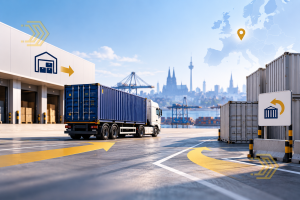
A port discharge and an inland empty return are separate commercial decisions. Maersk’s Netherlands guidance states that merchant-haulage containers should return to the bill-of-lading Place of Delivery location. Alternative returns require carrier confirmation and may incur a drop-off fee, subject to availability. This is a specific carrier example, not an industry-wide permission.
For a container discharged in Rotterdam and delivered to Austria, a forwarder should verify the actual return permission before pricing the journey. A carrier’s presence in Vienna does not establish that a particular box may be returned there. Confirm the equipment type, depot, acceptance validity, charge and applicable detention terms in writing.
Evaluate the cost through empty return. A cheap loaded move can become expensive if the haulier later has to reposition an empty container over a long distance. Where an alternative depot remains unconfirmed, show that uncertainty in the offer instead of assuming the customer will obtain approval after delivery.
Use a Vietnam-to-Europe Shipment Timeline That Moves With the Vessel
Recommended workflow: before booking, agree service scope and cost allocation; after departure, confirm document and payment arrangements; before arrival, verify pickup rights, customs preparation and the delivery appointment. Once collection is complete, track empty return and retain the depot receipt. These are operational recommendations, not universal legal deadlines.
Maersk’s published Netherlands checklist starts preparation 21–14 days before ETA and addresses payer instructions during the 13–7 day period. Use the latest shipment-specific requirements; if ETA moves forward, bring the preparation tasks forward too.
Interchains Insight
The most useful destination comparison shows how the cargo becomes collectable and how the container returns, alongside the cost. A slightly lower handling fee has little value if the service scope leaves document follow-up, pickup authorisation or empty return without an owner. Agree those responsibilities while there is still time to choose a different arrangement.
Frequently Asked Questions About CIF Shipments from Vietnam to Europe
Does prepaid freight mean all destination charges are paid
No. Check the carrier quotation, bill and sales contract. “Freight prepaid” should not be treated as confirmation that every local charge or delivery service is included.
Must a handling fee be charged per shipment
No universal billing basis should be assumed. Ask the provider to identify the unit and service scope, then compare the total for your actual container and bill count.
Does a delivery order guarantee immediate pickup
No. Customs, terminal availability, digital authorisation and the collecting operator’s arrangements also need to be ready.
Can the empty container be returned near the buyer
Only when the carrier’s instructions permit that return. Obtain the depot and any related charge in writing before relying on it in the transport budget.
Plan Your Vietnam-to-Europe Shipment With Interchains
For your next Vietnam to Europe shipment, send Interchains the loading port, discharge port, final delivery address, cargo details, container count and type, expected shipping date and agreed trade term. Specify whether you need ocean freight only or coordination with a destination partner for release and inland delivery. Our team can review the transport scope and identify charges, document responsibilities and return conditions that need clarification before booking. Port coverage, agent services and carrier-specific conditions must be confirmed for the shipment; no standard handling fee or free-time allowance is assumed.
Explore Interchains Ocean Freight | Request a shipment review
Sources and scope
[B1] ICC · Incoterms 2020 · CIF rules and cost allocation
[B2] ICC Academy · CIF and CIP explained · 7 October 2024
[B3] Maersk · Netherlands customer import checklist · accessed 21 September 2026
[B4] Portbase · Secure Chain for forwarders · accessed 21 September 2026
[B5] Portbase · Starting in the Secure Chain · accessed 21 September 2026
[B6] Maersk · Netherlands imports and container drop off · accessed 21 September 2026
Sources checked on 21 September 2026. This guide combines ICC trade-term guidance with named carrier and port-community examples. Commercial checklists are Interchains recommendations. No live destination tariff, universal free-time allowance or confirmed Vienna depot acceptance is quoted.
